Tree Pruning in Chigwell
If you are looking for tree pruning in Chigwell, you are likely dealing with a tree that has become overgrown, is blocking light, is affecting a driveway or roofline, or simply needs professional care to stay healthy and tidy. Trees add character and value to homes across Chigwell, from larger gardens near established residential roads to smaller plots where space is at a premium. But without the right pruning, even a beautiful tree can become awkward, untidy, or unsafe.
Our tree pruning service is designed for local homeowners, landlords, property managers, and businesses that want practical, well-timed work carried out with care. Whether you need crown thinning, crown reduction, deadwood removal, formative pruning, or clearance from buildings and boundary lines, we can help you make the right choice for the tree and the property. Contact us today if you want to discuss the best option for your tree and receive a quote based on the work required.
Because Chigwell includes a mix of tree-lined residential streets, detached homes with mature gardens, and commercial premises that need safe access and tidy presentation, a local team can make a real difference. Tree pruning in Chigwell is not just about appearance; it is about growth control, safety, light management, and keeping trees in good condition for years to come.
Why tree pruning matters for Chigwell properties

Many property owners only think about pruning when a tree begins to cause a problem, but regular attention can prevent issues before they develop. Trees naturally respond to their environment, and in built-up areas that often means growth towards light, over fences, over pavements, and towards roofs, windows, gutters, and overhead lines. Proper pruning helps keep growth balanced and suitable for the available space.
For homes in Chigwell, this can be especially important where mature trees sit close to patios, extensions, garages, or neighbouring gardens. A carefully pruned tree may allow more sunlight into living rooms and outdoor spaces, reduce leaf fall in gutters, and improve the view from the house without stripping the tree of its character. Well-planned pruning should support the tree’s long-term health rather than simply cutting it back.
Commercial properties also benefit from pruning. Shops, offices, hospitality venues, and managed grounds often need trees kept neat, clear of signage or access routes, and safe for customers and staff. A local tree surgeon familiar with the area can work around busy entrances, parking bays, service access, and restricted spaces in a sensible and efficient way.
What tree pruning can achieve
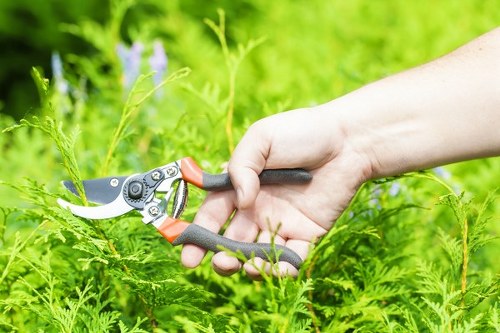
Tree pruning covers a range of specialist tasks, each aimed at improving the structure, appearance, or safety of a tree. The right approach depends on the species, age, condition, and location of the tree, as well as what you want to achieve from the work. It is rarely a one-size-fits-all job.
Common reasons customers ask for tree pruning in Chigwell include the following:
- Reducing branches that are too close to buildings, windows, or roofs
- Improving light levels in gardens, kitchens, or conservatories
- Removing dead, damaged, or diseased branches
- Preventing branches from touching fences, sheds, or nearby trees
- Shaping young trees so they grow with a strong structure
- Managing height or spread in smaller gardens
- Improving safety where branches could fall or interfere with access
Pruning can also help reduce wind resistance in certain situations, especially where trees are exposed or have a dense canopy. That said, the aim is not always to make a tree smaller. In many cases, targeted pruning is enough to improve the tree without changing its natural form too dramatically.
For customers who are unsure what their tree needs, an experienced local arborist can assess the canopy and explain the options clearly. Sometimes a light prune is sufficient; in other cases, a more considered reduction or clearance works better. The best outcome is the one that suits both the tree and the property.
Common pruning services we provide
Different trees and different situations call for different methods. When people enquire about pruning, they often use one general phrase, but the actual work may be more specific. Below are some of the most common types of tree pruning requested by customers in Chigwell and the surrounding area.
Crown thinning
Crown thinning removes selected branches throughout the canopy to reduce density while keeping the overall shape. This can let in more light, allow air movement through the tree, and make the canopy feel less heavy. It is often a useful option for mature trees in gardens where shade has become too dense but the owner wants to retain height and structure.
Crown reduction
Crown reduction is used when a tree has outgrown its space or is encroaching on structures. The work shortens the outer branches and reduces the overall spread or height while maintaining a natural outline. A careful crown reduction is very different from topping; it is a more thoughtful method that supports the tree’s condition and shape.
Deadwood removal
Deadwood can accumulate in both large and small trees. Removing dead branches reduces the risk of falling material, tidies the tree, and can also improve its visual appearance. Deadwood removal is especially helpful in gardens, near parking areas, and in places where people regularly walk beneath the canopy.
Formative pruning
Young trees benefit from early shaping. Formative pruning helps develop a good branch structure, which can reduce future problems and support healthy growth. This is particularly valuable for newly planted trees in domestic gardens, communal spaces, and landscaped commercial sites.
How our tree pruning service works

We keep the process straightforward so customers can quickly understand what will happen and what is included. From the first discussion to the final tidy-up, the aim is to provide safe, sensible tree care that suits your property and your schedule.
- Initial discussion – You tell us what is happening with the tree, whether it is blocking light, touching structures, or simply looking untidy.
- Site assessment – We consider the species, size, condition, access, and any surrounding obstacles such as fences, garages, parked cars, or neighbouring planting.
- Recommended pruning method – We explain the best approach, whether that is crown thinning, reduction, deadwood removal, or another targeted method.
- Quotation – The quote is based on the actual work required and the complexity of the job.
- Scheduled visit – We arrange a convenient time and plan the work around access, parking, and any nearby sensitivities.
- Pruning and tidy-up – We carry out the work carefully, clear away the resulting material, and leave the area as neat as possible.
Good tree pruning should be as much about planning as cutting. In Chigwell, that can mean taking account of shared driveways, narrow access routes, garden gates, soft landscaping, and neighbouring properties. A local team will usually be better prepared for those practical details than a company unfamiliar with the area.
If you are arranging work for a rental property, block-managed site, business frontage, or private home, it helps to choose a team that can work cleanly and efficiently. Book your service now if you want to get the work scheduled without unnecessary delay.
What is included in a professional pruning visit?

Customers often want to know exactly what they are getting when they request tree pruning in Chigwell. While every job is different, a professional visit should usually include a clear scope of work, proper cutting techniques, and responsible disposal of the pruned material.
Typical inclusions
- Assessment of the tree’s condition and structure
- Advice on the best pruning method for the tree
- Safe use of climbing, cutting, and lowering equipment where required
- Controlled pruning to maintain the tree’s natural form
- Removal of dead, weak, rubbing, or crossing branches where appropriate
- Clearing and tidying of the work area after completion
- Removal of brash, branches, and green waste unless otherwise arranged
Depending on the situation, pruning may also involve checking for signs of disease, poor union growth, storm damage, or long-term crowding within the canopy. If the tree has a bigger problem than expected, you should be told about it clearly so you can make an informed decision about the next step.
Important: Not every tree should be heavily reduced. Some species cope better than others, and some pruning styles suit particular growth habits. A professional approach protects the tree’s health rather than forcing it into an unnatural shape.
Why local knowledge matters in Chigwell
Choosing a local company for tree pruning in Chigwell has practical advantages that can make the whole job smoother. Local teams are more likely to understand the property mix in the area, the typical garden layouts, and the kinds of access issues that often arise. That includes narrow side passages, shared driveways, rear access through homes, and limited on-street parking near busier roads.
Chigwell contains a range of property styles, from established family homes with mature planting to modern developments, apartment blocks, and premises that need their outdoor areas managed with care. In some places, trees grow very close to boundaries or overhang adjoining land, while in others the main concern is keeping formal frontages neat and welcoming. A local arborist can adapt the pruning plan to the property rather than treating every site the same.
That local familiarity can also save time. Arriving prepared for parking limitations, limited turning space, or the need to protect paved driveways and landscaped borders means the job can be carried out more efficiently and with less disruption. For many customers, that practical reliability is one of the biggest reasons to choose a local service.
Residential customers
Homeowners often ask for pruning because a tree has become too dominant in the garden, is shading a lawn or patio, or is interfering with roof edges and guttering. Some need a one-off correction, while others want a recurring maintenance plan to keep trees in good shape year after year. Pruning can restore balance, open up views, and make outdoor spaces more usable.
Commercial customers
Commercial sites usually need pruning that is tidy, safe, and timed to minimise disruption. This might include work around customer parking, entrances, staff walkways, or landscaped boundaries. Trees on business premises often need to look well-kept, especially when they form part of the first impression visitors receive. A professional service can help keep the site presentable and manageable.
Signs your tree may need pruning
If you are unsure whether the tree needs work, there are some common signs that pruning may be worthwhile. You do not need to wait for obvious damage before taking action. In many cases, early intervention is easier, safer, and less disruptive.
- Branches are brushing the house, roof, or garage
- The canopy is blocking too much natural light
- Dead or broken limbs are visible in the crown
- The tree looks unbalanced or lopsided
- Branches are interfering with paths, driveways, or gates
- There is excessive shading over lawns, beds, or seating areas
- Nearby growth is causing crowding between trees
- The tree is young and needs shaping to encourage a good structure
Some customers also call for pruning after seasonal storms or strong winds, especially if branches have moved, split, or started to hang awkwardly. In those cases, careful pruning can restore safety and help the tree recover its form.
Preparation checklist before your pruning appointment
There are a few simple things you can do to make the visit easier and help the work run smoothly. This is particularly useful where access is limited or where cars, garden furniture, or delicate planting are close to the tree.
- Move vehicles away from the working area if possible
- Clear access through side gates, driveways, or garden entrances
- Remove fragile items, furniture, or ornaments near the tree
- Tell us about any known issues such as weak fencing, soft ground, or underground features
- Let neighbours know if branches overhang shared boundaries and access may be needed
- Keep pets and children away from the area during the work
It is also helpful to think about your preferred outcome before the team arrives. For example, you may want more light, a cleaner outline, safer clearance above a footpath, or a less dominant canopy. The clearer your priorities, the easier it is to agree the right pruning approach.
Pricing factors for tree pruning
Costs for pruning can vary because every tree and site is different. Rather than using a fixed figure, a proper quote should reflect the actual work involved. This helps ensure you are paying for the service you need, not a one-size-fits-all estimate that may not suit your tree.
Factors that commonly affect the price include:
- Tree size and height – larger trees usually take more time and equipment
- Species and structure – some trees are denser, more delicate, or more difficult to prune correctly
- Condition – damaged, diseased, or unstable trees may need extra care
- Access – narrow gardens, difficult parking, or restricted entry can affect how the work is completed
- Amount of material to remove – heavier pruning often creates more waste
- Location around the property – work near roofs, fences, glass, or landscaped areas needs careful handling
- Disposal requirements – whether green waste is to be removed or left onsite by arrangement
When you request a quote, it helps to share as much detail as possible about the tree and the site. Photos can sometimes be useful, but a proper assessment may still be needed for larger or more complex jobs. If the tree sits close to neighbouring land, it may also be wise to think about boundary considerations before any work begins.
Why customers choose professional pruning instead of DIY
It can be tempting to cut back a tree yourself, especially if only a few branches seem to be causing a problem. But tree pruning is more technical than many people expect. Poor cuts can leave the tree vulnerable to disease, uneven regrowth, or structural weakness. Over-pruning can stress the tree and make the situation worse over time.
Professional pruning offers several benefits:
- Cleaner cuts made in the right place
- Better understanding of how the tree will respond
- Safer work at height and near obstacles
- More suitable shaping for the species and age of the tree
- Reduced risk of damaging roofs, fences, or garden features
- A tidier finish with waste removed efficiently
For larger trees, awkwardly positioned trees, or anything near a road, roof, or neighbouring garden, it is usually far better to use an experienced team. Request a free quote if you want the work assessed properly before making a decision.
Areas covered around Chigwell
Tree pruning customers often come from across Chigwell and nearby surrounding locations where similar property types and access issues are common. This may include nearby residential streets, neighbourhoods with mature gardens, and local business premises that need outdoor maintenance.
Areas often associated with this type of work include nearby parts of Woodford, Loughton, Buckhurst Hill, Abridge, and Ilford, as well as other local Essex and bordering East London locations where tree care demands are similar. If you are close to Chigwell and unsure whether your property is covered, it is worth asking when arranging a quotation.
For many customers, the convenience of working with a nearby arborist is part of the appeal. You are more likely to get a team that understands local access, knows how to approach established gardens, and can visit without unnecessary delays.
Frequently asked questions
How often should trees be pruned?
It depends on the species, age, location, and your goals. Some trees need attention every few years, while younger trees may benefit from formative pruning more regularly. Trees near homes or boundaries can sometimes need more frequent checks to keep growth under control.
Will pruning harm my tree?
Proper pruning should not harm the tree when done correctly and at the right time. In fact, well-targeted pruning can support better structure, reduce risk, and improve long-term health. The key is not to remove too much or cut in the wrong places.
What is the difference between pruning and cutting a tree back?
Pruning is a controlled arboricultural process that removes selected branches for health, structure, or safety. “Cutting back” can mean many things, but it is often used more loosely. A professional service will explain the exact method being used rather than using vague terms.
Can you prune a tree if it is close to my house?
Yes, many trees can be pruned safely even when they are close to a house, garage, or extension. The work simply needs to be planned properly, with suitable equipment and careful handling around the structure.
Do you remove all the waste?
Waste removal is typically discussed as part of the service, and the exact arrangement can be confirmed when the work is quoted. The aim is always to leave the site tidy and manageable after the pruning is complete.
Is pruning possible in winter?
In many cases, yes. Some trees are commonly pruned during dormant periods, while others benefit from work at different times of year. The right timing depends on the species and the reason for the pruning, so it is best to ask for advice.
What makes a good tree pruning service?
A good tree pruning service should be clear, practical, and respectful of both the tree and the property. You should expect straightforward communication, a sensible recommendation for the type of work needed, and a tidy finish once the job is complete.
Look for a service that takes time to understand what you want to achieve. Do you need more daylight? Better clearance? A neater shape? Safer branches? Different goals often require different methods, and a proper service should explain that in plain language. Professional tree pruning in Chigwell should never feel rushed or generic.
It also helps when the team is comfortable working around the realities of local properties. That includes boundaries, neighbours, access gates, parked cars, decorative planting, and hard surfaces that should be protected during the job. The more carefully the site is handled, the better the overall experience tends to be.
Ready to arrange tree pruning in Chigwell?
If your tree is becoming too large, too dense, or too close to a structure, now is a sensible time to arrange an assessment. Regular care can improve safety, support healthy growth, and keep your garden or business frontage looking its best. Whether you need a single pruning visit or want to discuss ongoing maintenance, we can help you choose the right approach for your property.
Contact us today to talk through your tree, ask questions about the best pruning method, or request a free quote. If you want a local team that understands the practical realities of working in and around Chigwell, we are ready to help. Book your service now and take the next step towards a safer, tidier, better-managed tree.